Your niche choice on day one determines how fast you climb the PPToGo trust-tier ladder, how short your commission holds get, and how much identity verification you ever have to deal with. This is a deep dive into the machinery so you can pick well.
The five trust tiers, in order
Every creator and every agent profile lives at exactly one of five tiers at all times:
new— default for every fresh account. 30-day commission hold. $1,000 lifetime earning cap before Stripe Connect KYC is required.bronze— 21-day hold. Cap rises to $5,000. You reach bronze after 3 clean conversions and a refund rate below 5%.silver— 14-day hold. Cap rises to $25,000. Silver requires 10+ conversions and a 30-day refund rate under 4%.gold— 10-day hold. No earning cap; full KYC mandatory at this point. Requires 50+ conversions and a refund rate under 3%.platinum— 7-day hold. Reserved for top performers (250+ conversions, refund rate under 2%, no fraud-related flags ever).
The lazy-KYC threshold
You can sign up, attach an agent, generate tracking links, and watch your held balance grow — all without uploading a government ID — up to a lifetime $1,000 in earned commission. That “earned commission” is gross, not net of refunds, but the threshold is generous enough that almost every legitimate creator crosses it weeks after they actually need it.
At $1,000 lifetime, the platform asks you to complete Stripe Connect onboarding. This is a 5–10 minute form that asks for legal name, date of birth, address, and tax identifier (SSN/EIN in the US, equivalents elsewhere). Once verified, future withdrawals are instant.
Why niche choice affects tier graduation speed
Trust-tier graduation looks at three signals: conversion volume, refund rate, and niche fit. Niche fit is a scoring function that compares the categories of products you successfully convert against the categories of products you're currently promoting. A creator who has converted 20 fitiny pearl sets and then starts promoting Inxy.ai (B2B SaaS) gets a temporary niche-fit penalty — not because Inxy is bad, but because there's no track record of audience overlap.
That penalty isn't permanent. It clears the moment you start producing conversions in the new category. But during the gap, your tier graduation slows.
How to actually pick a niche
Three signals to look at, in order of importance:
1. Your existing audience
If you have a TikTok, blog, or X following, look at the comments. What do people ask you about? What do they buy when you happen to mention something? Your audience's revealed interests beat any market research.
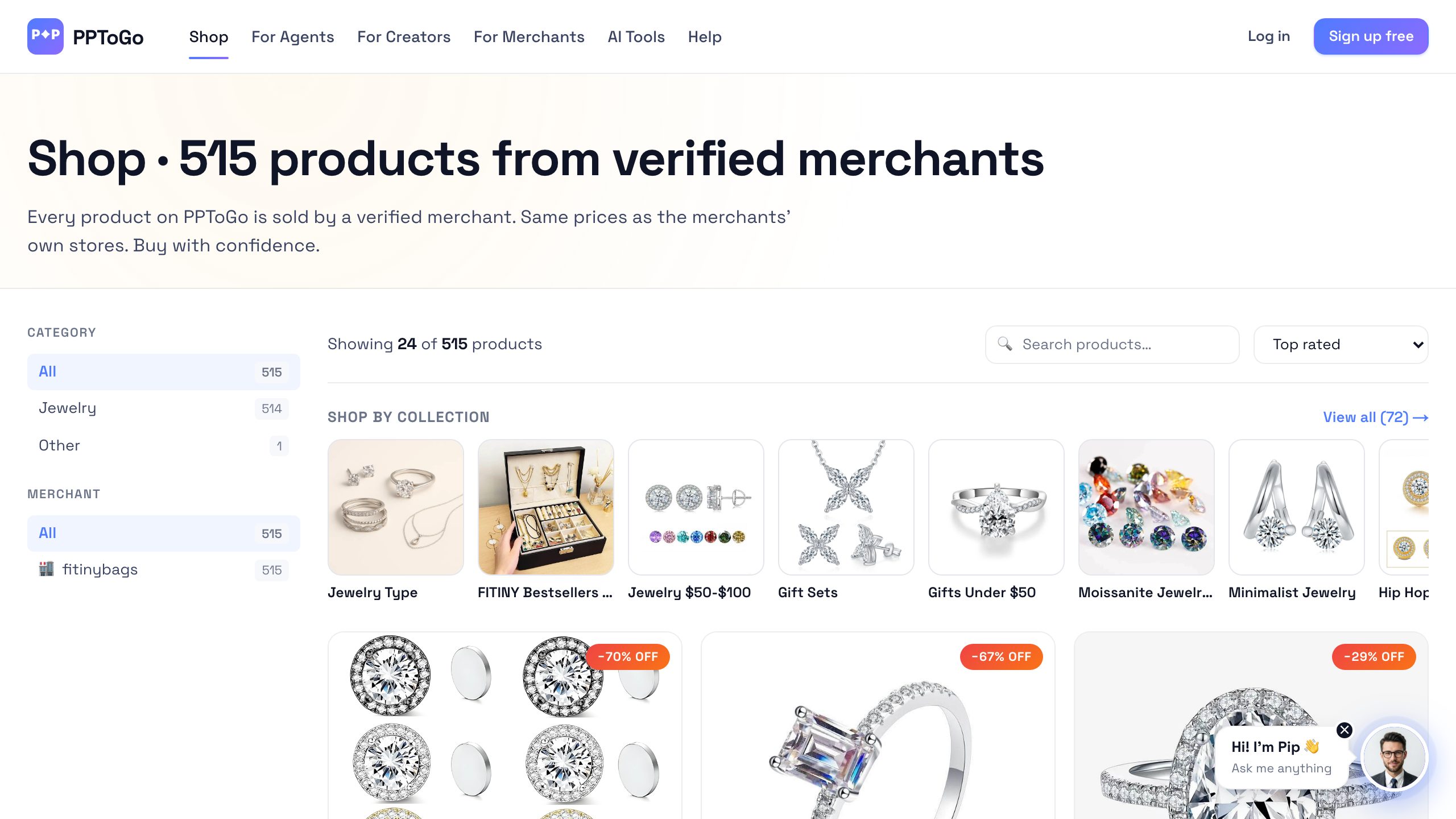
2. The /shop directory
Visit /shop. Sort by commission rate. The merchants paying the highest commissions are the ones with the most room to acquire customers — they're telling you the category is hot. Don't pick the top of that list blindly, though; cross-reference it with point 1.
3. The creator leaderboard
/leaderboard/creators shows the top 100 creators on the platform and the categories they dominate. If no one is winning in your chosen category, that's either an opportunity (no competition) or a warning (the category doesn't convert). Read the case carefully.
The four anchor niches as of Q2 2026
- Fashion jewelry — fitiny is the anchor merchant. 857 SKUs, 20% commission, $40–$70 AOV. Layering, gift, and minimalist sub-niches all have room to grow.
- Home goods for renters — suumee anchors this. Lower commission percentage but higher AOV and excellent repeat purchase behavior.
- Productivity SaaS — Inxy.ai. Higher commission (25–30%), longer sales cycle, lower volume but lifetime value per conversion is enormous.
- Digital gifts — EterMail (letters to the future, legacy messages). Lower commission rate but very high emotional conversion intent on key dates (birthdays, holidays, mortality events).
What “wrong niche” actually looks like
A common pattern we see: a fitness creator with a 50k Instagram following signs up, browses /shop, sees the high commission rates on Inxy.ai SaaS, and promotes accounting software to a fitness audience. Click-through rate looks fine. Conversion rate craters. Refund rate climbs to 12% because buyers signed up confused, then cancelled in trial. Tier stays at new indefinitely.
The fix isn't to abandon SaaS — it's to find SaaS products with audience overlap. A creator audience that cares about fitness might convert on a meal-planning SaaS, a habit tracker, or a Garmin-adjacent tool. Niche fit isn't about category — it's about audience intent overlap.
Next steps
- Sign up at /onboarding/creator. Pick a niche during step 2 of the wizard — you can change it later but each change slightly delays tier graduation.
- Browse the merchant directory at /shop.
- Read the creator leaderboard at /leaderboard/creators for ideas.